
Benefits Fraud, Healthcare Stewardship, & The RMT Workforce.
An Open Letter To Health Benefits Providers
I’m sharing this letter because I believe an important aspect of the recent discussions surrounding massage therapy benefits have been largely overlooked.
Because benefit providers are responsible for administering and safeguarding employer-funded health benefits, I believe their perspective is an important part of a broader conversation about how workforce structure may influence healthcare stewardship, clinically appropriate utilization, and benefit integrity.
I believe an important question is whether the workforce structures responsible for delivering benefits services promote healthcare stewardship, workplace accountability, and clinically appropriate utilization.
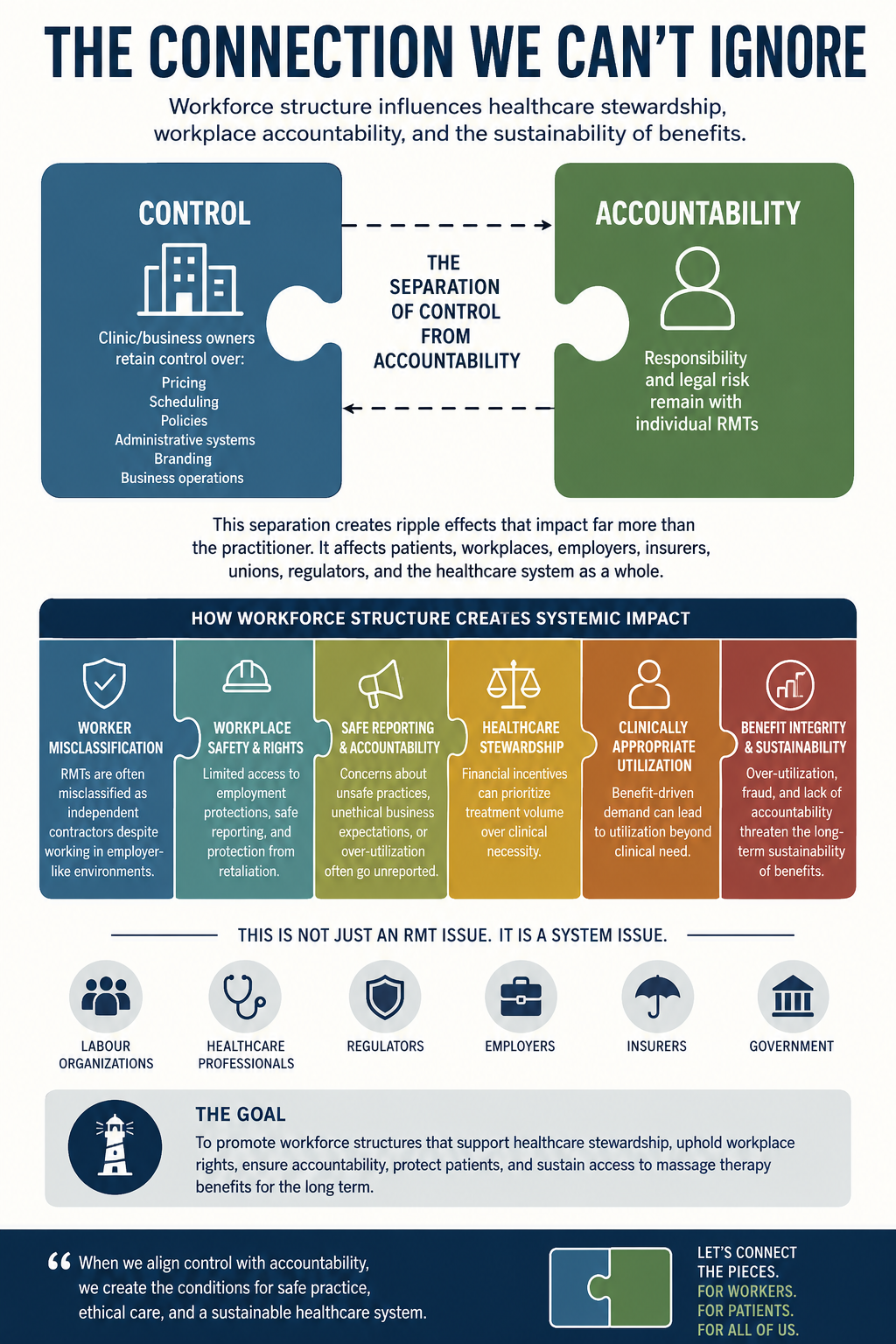
If a workforce is structurally organized in a way that incentivizes treatment volume while separating operational control from accountability, we should be asking whether that structure contributes to benefit abuse, over-utilization, and other downstream issues.
As organizations responsible for administering employer-funded health benefits, benefits providers have a unique perspective on utilization patterns, benefit sustainability, and the systems intended to prevent fraud and abuse. For that reason, I believe your perspective is an important part of this broader conversation.
In reviewing one organization's approach to benefits fraud and abuse, I noted the emphasis placed on prevention, early detection, education, and eliminating opportunities that allow fraud or abuse to occur. I believe the workforce structures responsible for delivering insured massage therapy services deserve consideration within that same framework.
I am an RMT in BC and have spent the past several months leading an independent advocacy project examining worker classification, workplace safety, governance accountability, and systemic risks within the massage therapy profession. Questions surrounding healthcare stewardship, benefit integrity, and clinically appropriate utilization emerged as one component of that broader work.
A significant portion of the BC massage therapy workforce appears to be misclassified as independent contractors despite working within employer-like business structures. Clinic owners frequently retain substantial control over pricing, scheduling, billing, clinic policies, administrative systems, branding, and business operations while responsibility and legal risk remain with individual RMTs. This separation of control from accountability is a central theme of this advocacy project.
This workforce structure may create financial incentives that favour treatment volume over clinical necessity. It also leaves many RMTs without employment protections, independent reporting mechanisms, or meaningful protection from retaliation if they raise concerns about unsafe practices, inappropriate business expectations, or the over-utilization of insured healthcare benefits.
One observation that has emerged throughout this project is the normalization of the phrase "use up your benefits before the end of the year." A preliminary review of publicly available social media advertising identified repeated marketing messages encouraging patients to "use up" or "not waste" their extended health benefits before year end. While some clinics appropriately emphasize ongoing treatment planning and clinical need, the prevalence of benefit-driven marketing raises broader questions regarding healthcare stewardship and clinically appropriate utilization.
That language reflects more than a marketing message. It reflects a shift in how care is framed. The decision to seek treatment becomes driven by the existence of insurance coverage rather than the presence of clinical need.
We would not typically encourage patients to use prescription medications or other insured healthcare services simply because benefits remain available at the end of the year. Yet within massage therapy, benefit-driven utilization has become sufficiently normalized that many patients report difficulty obtaining appointments late in the year because demand is driven by expiring coverage rather than clinical need.
At the same time, there are well-documented disciplinary cases involving false insurance claims by both practitioners and claimants. While these cases represent individual misconduct, they also raise broader questions about the systems, incentives, and accountability structures in which care is delivered.
One of the recurring findings of this project is that many RMTs recognize these concerns but have no practical way to report them without risking retaliation or the loss of their livelihood. Without meaningful labour protections or independent reporting mechanisms, concerns about inappropriate utilization, workplace safety, or unethical business practices frequently remain private rather than becoming opportunities for quality improvement and healthcare stewardship.
This advocacy project examines how workforce structure influences workplace safety, ethical practice, accountability, patient protection, healthcare stewardship, and the long-term sustainability of employer-funded health benefits.
I believe there is an opportunity for labour organizations, healthcare professionals, regulators, government, employers, and benefit providers to have a broader conversation about these issues.
If this work is of interest to you, I would welcome the opportunity to discuss it further. Please feel free to contact me.
Thanks for reading
To learn more about benefits fraud and abuse visit these websites:
PBC Benefits Fraud
Fraud Is Fraud - What Is Benefits Fraud?